CNC turning remains one of the most reliable and scalable machining processes for producing round, cylindrical, and rotational components with exceptional dimensional accuracy. At Kinetix FabWorks, CNC turning is engineered for consistency, repeatability, and industrial-grade performance — whether the requirement is a functional prototype or a high-volume production run.


CNC Turning in Modern Industrial Manufacturing
CNC turning is a subtractive manufacturing process where a rotating workpiece is shaped using a precisely controlled cutting tool. The process is ideal for components that demand tight tolerances, smooth surface finishes, and dependable repeatability across batches.
By using computer-controlled CNC lathes, manufacturers achieve far greater accuracy and efficiency compared to manual turning. This makes CNC turning a preferred solution for industries where part consistency directly impacts performance, safety, and lifecycle reliability.
At Kinetix FabWorks, CNC turning operations are optimized to balance speed, precision, and material efficiency — ensuring parts are produced accurately without unnecessary waste or rework.
What Is CNC Turning & How Does It Work?
CNC turning excels in producing parts that must maintain exact dimensions across thousands of units. The automated nature of the process minimizes human error and allows for consistent results even in complex geometries.
Industries that rely on CNC turning benefit from predictable lead times, stable quality standards, and the flexibility to scale production volumes without compromising tolerances. This makes CNC turning especially valuable for components that integrate into larger mechanical systems where fit and alignment are critical.
Kinetix FabWorks applies process control, toolpath optimization, and inspection discipline to ensure every turned component meets defined engineering specifications.
Core CNC Turning Operations Used at Kinetix FabWorks
CNC turning is not a single action but a combination of coordinated machining operations that shape the final component.
Turning, Facing, and Diameter Control
Straight turning is used to reduce or maintain external diameters with high precision, while facing operations ensure flat, perpendicular surfaces. These fundamentals establish dimensional accuracy and structural balance in rotational parts.
Threading, Grooving, and Functional Features
Threading enables secure mechanical fastening, while grooving supports sealing, assembly alignment, and fluid control. These operations are executed with strict tolerance control to ensure functional reliability during real-world use.
Consistency Across Prototypes and Production Runs
Once a CNC turning program is validated, the same process can be scaled seamlessly from small batches to large-volume production. This consistency is critical for clients who require identical parts across multiple production cycles.
Global Service Coverage and Regional Sales Support

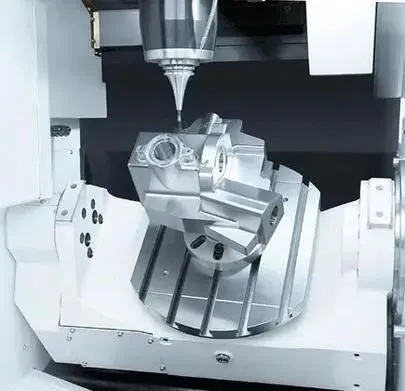
Kinetix FabWorks supports clients across multiple international markets through structured service coverage and region-aligned sales coordination. This approach ensures clear communication, efficient project handling, and dependable delivery timelines for global customers.
Service coverage and sales support extend across:
- Australia
- New Zealand
- United States
- Canada
- Europe
- Asia-Pacific
- China
By aligning technical capability with regional sales understanding, Kinetix FabWorks enables smoother project execution — from inquiry and specification review through production and dispatch.
CNC Turning as a Scalable Manufacturing Advantage
CNC turning continues to be a cornerstone of precision manufacturing because it combines accuracy, efficiency, and scalability in a single process. When executed with the right engineering discipline, it supports both innovation and long-term production stability.
At Kinetix FabWorks, CNC turning is approached not as a commodity service, but as a controlled manufacturing system — designed to deliver reliable parts, predictable outcomes, and global-ready supply capability for demanding industrial applications.